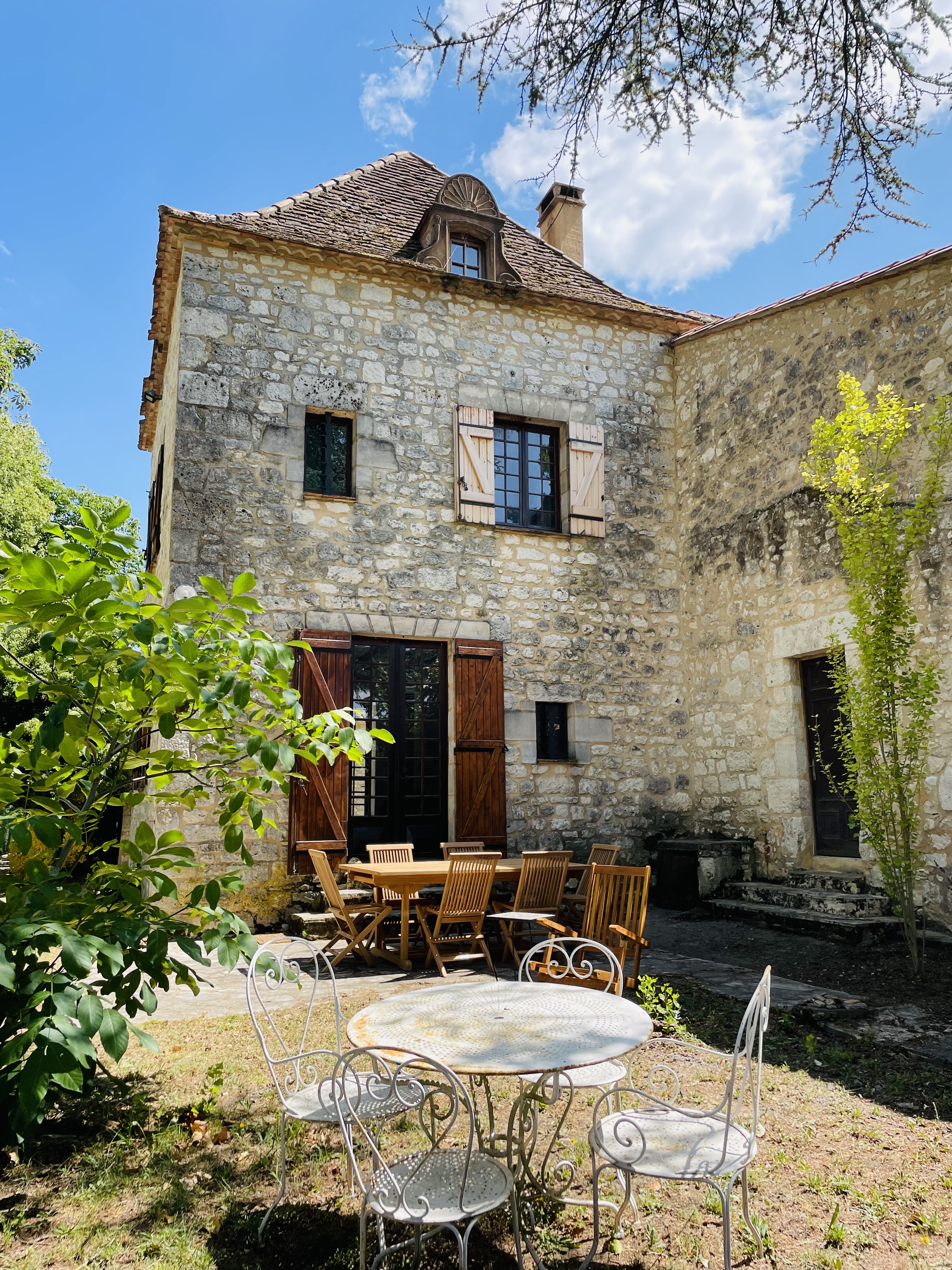
A 19th-century stone estate, quietly running as a working hospitality business — and as the physical evidence for two long projects.
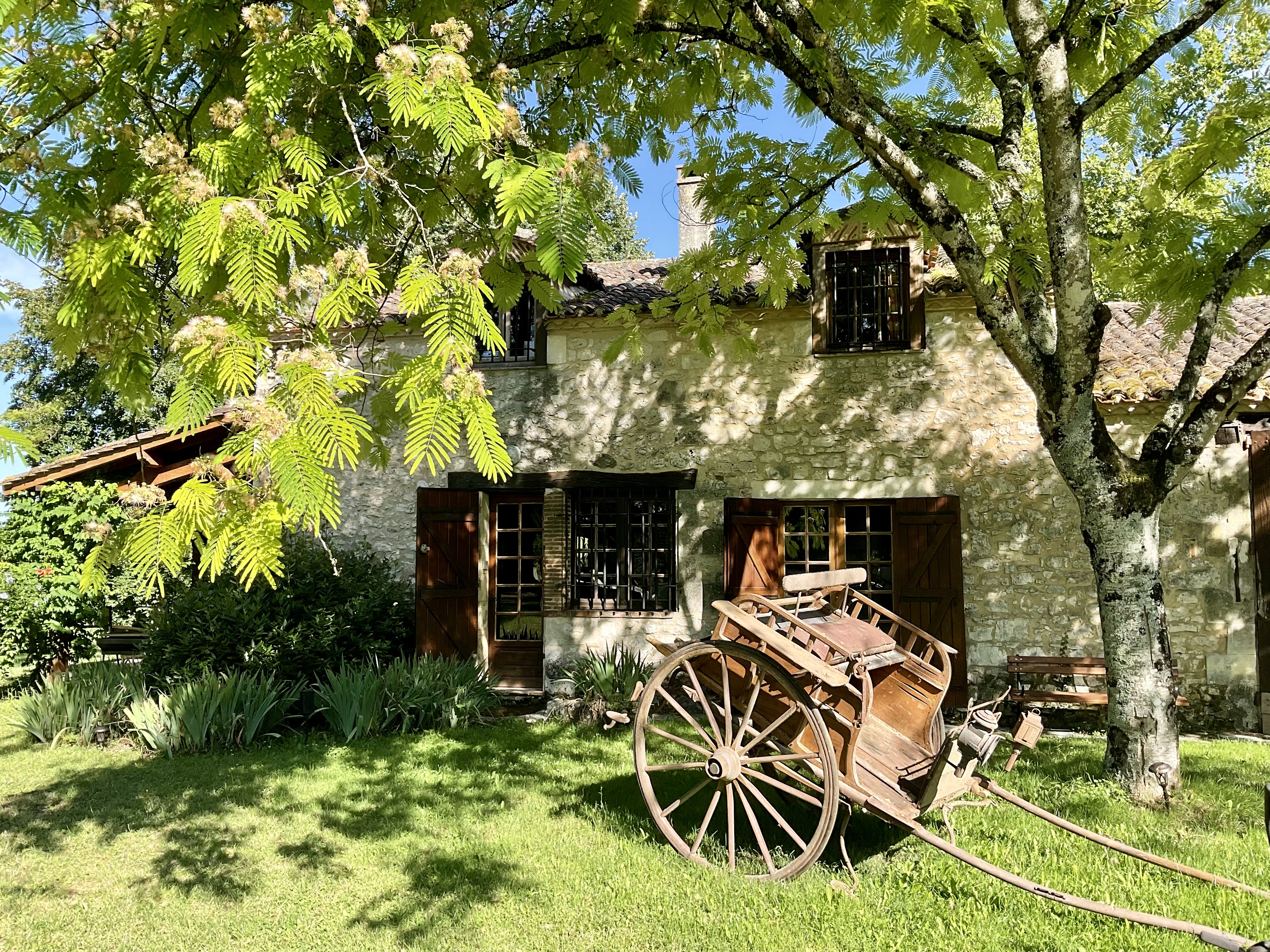
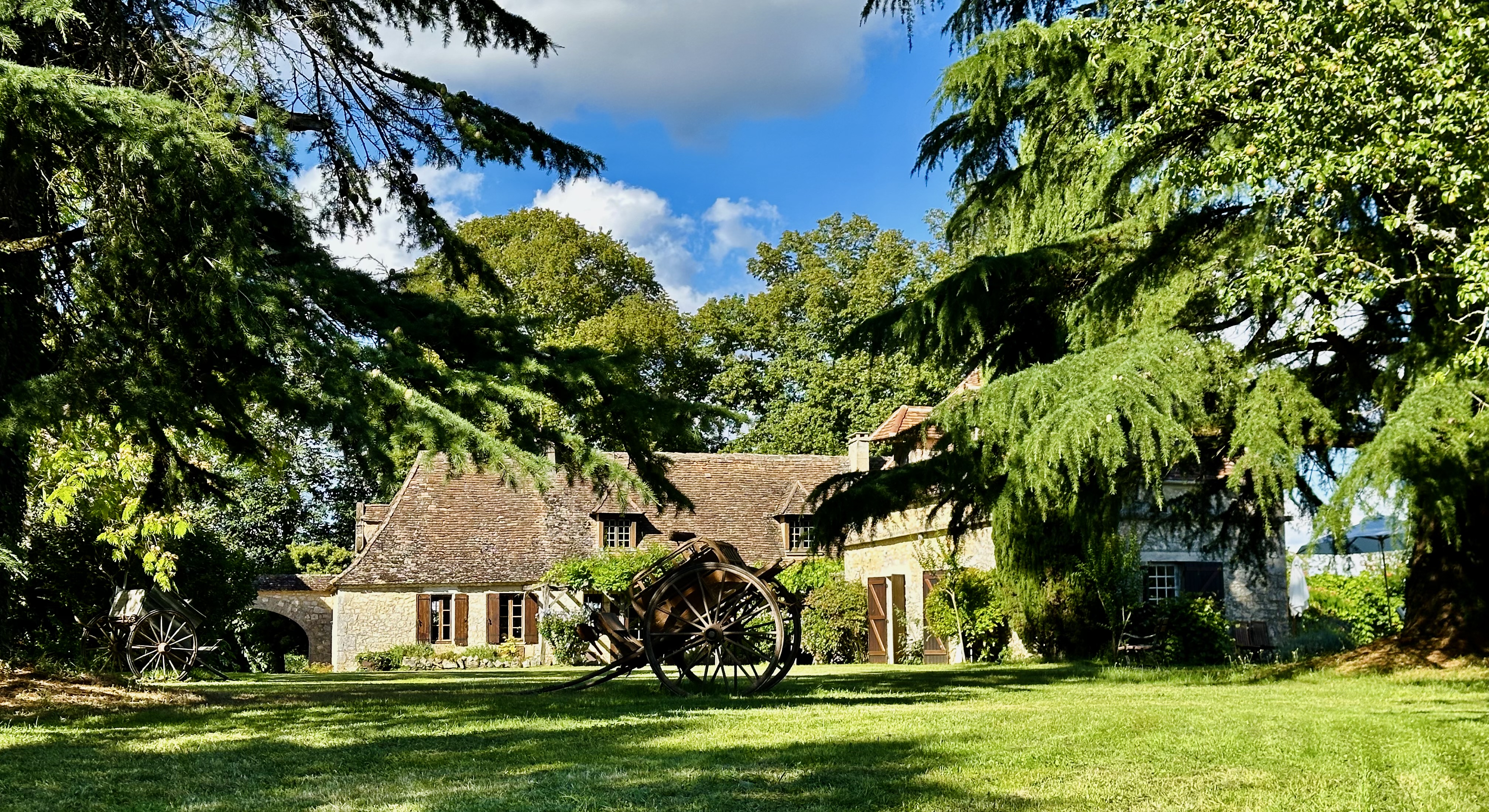
Le Suquet has been here, in one form or another, for most of two centuries. What you see now — five stone houses arranged around a west-facing courtyard, a pool, a tennis court, a tied-up vine, and enough pine, cedar, walnut and mimosa to shade a small village — is what generations of careful and occasionally careless stewardship looks like.
It's an active farm estate. Eleven hectares of fields and scrub, with sunflowers in the fields in July and sheep on the edges when the neighbour's stock is out. The buildings were agricultural before they were hospitality. The big house was a working manoir. The dovecote housed pigeons. The stable housed horses. The barn housed whatever the barn housed.
What they house now are guests, mostly — families on holiday, wedding parties, small teams on retreat, and the occasional academic curious about what happens when you try to turn the soil-and-electrons economics of a hectare of European farmland into something that pays for itself.
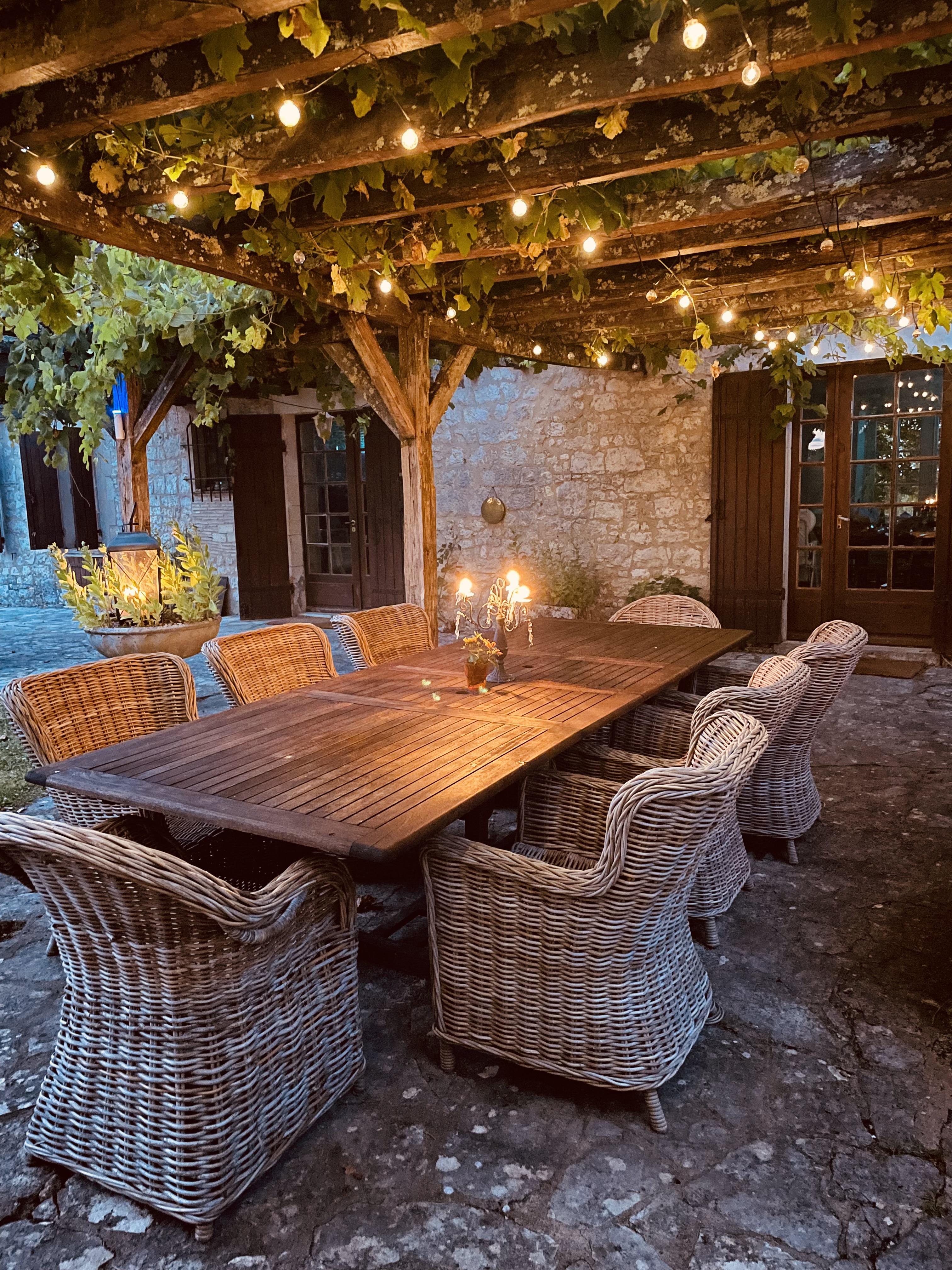
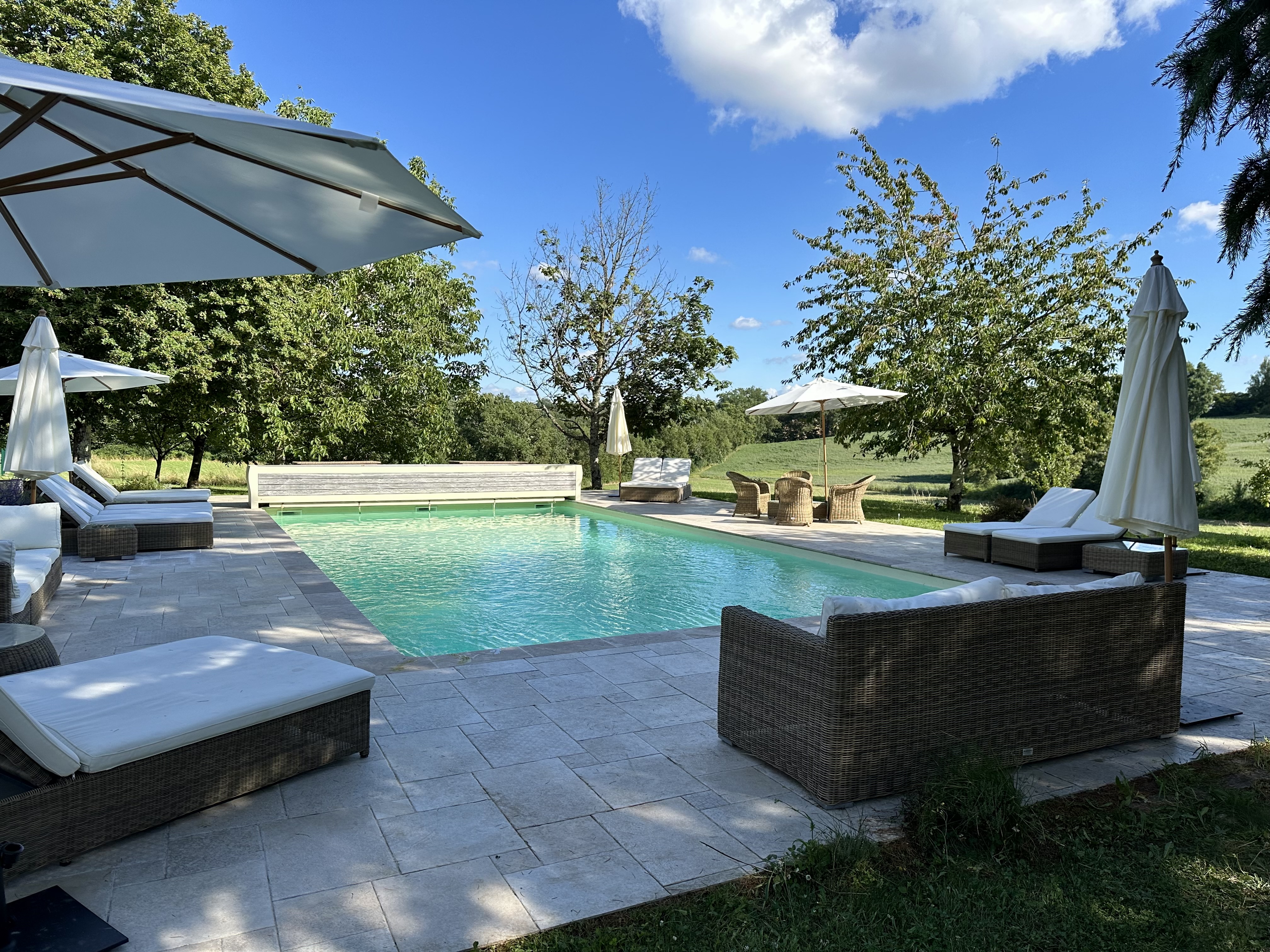
Practically: five self-contained houses, seventeen bedrooms in total, sleeps thirty-four. A twelve-by-six-metre heated pool. A full-size tennis court. Pétanque. Outdoor dining under the pergola, indoor dining in five different kitchens, and a central courtyard that comfortably seats forty for a long dinner. Each house has its own terrace and its own front door.
Book one house for a quiet week. Book two or three for an extended family. Or take the whole estate and fill it with whoever you most want to spend a long weekend with. That last option is what the place was built for, if we're honest.
Each house is fully self-contained with its own kitchen, bathrooms, terrace, and front door. All have full access to the pool, tennis court, courtyard, and gardens.
The anchor of the estate. Five bedrooms including a family room with a sunset view across the sunflower fields when they're in bloom. Generous living spaces, a proper farmhouse kitchen with a fireplace, and the ornate green headboard in the attic bedroom that everyone asks about.
Four bedrooms and the pergola that gets used for most of the candlelit dinners. Connects naturally with Tournesols for extended family groups who want proximity without living in each other's kitchens. The pergola alone seats ten comfortably.
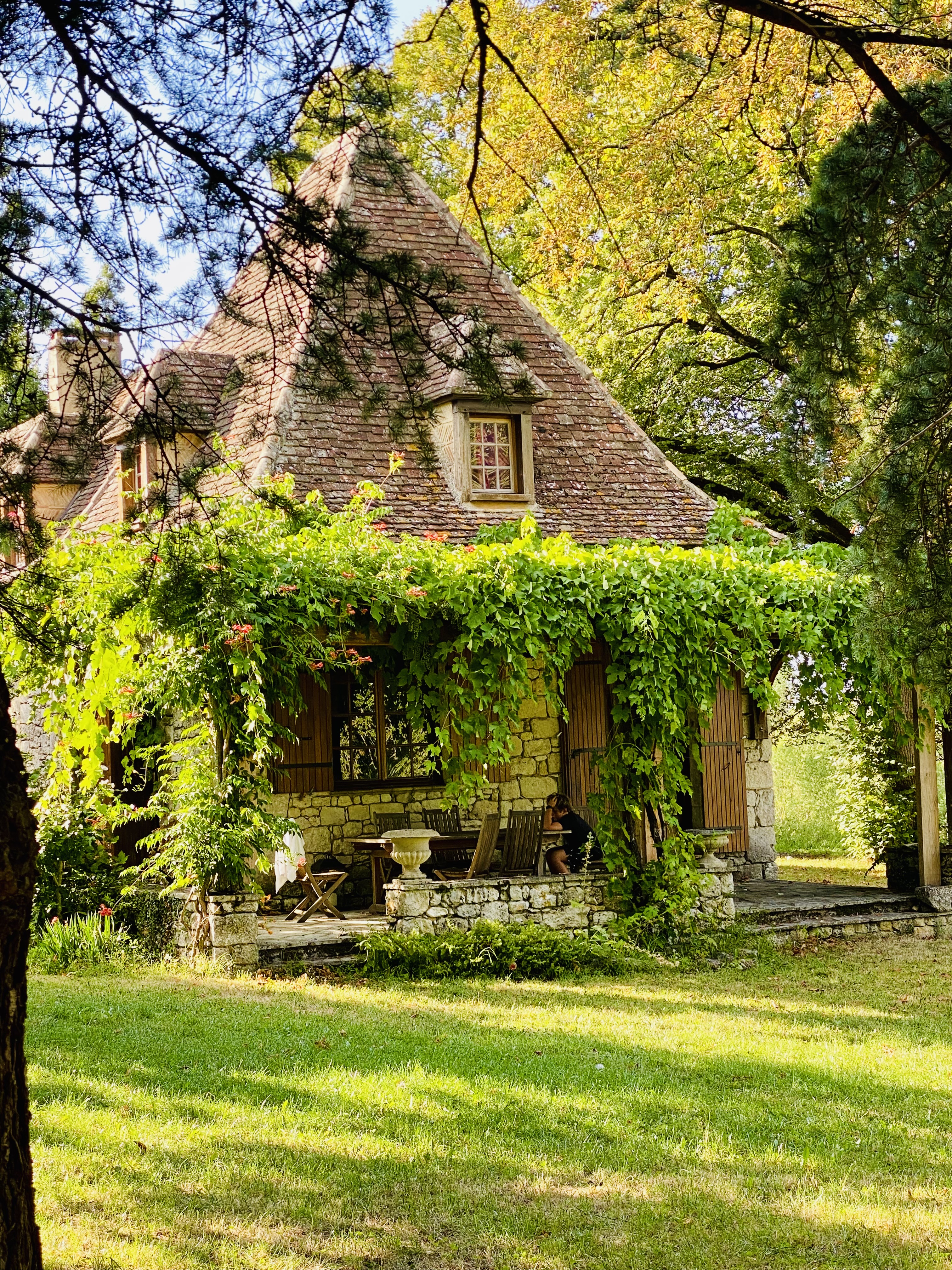
Three bedrooms under a pitched tiled roof with a climbing vine that has taken over the porch and been allowed to keep it. The light through the leaves in the afternoon is the reason people book this one twice. Works as a standalone for families, or as part of a whole-estate gathering.
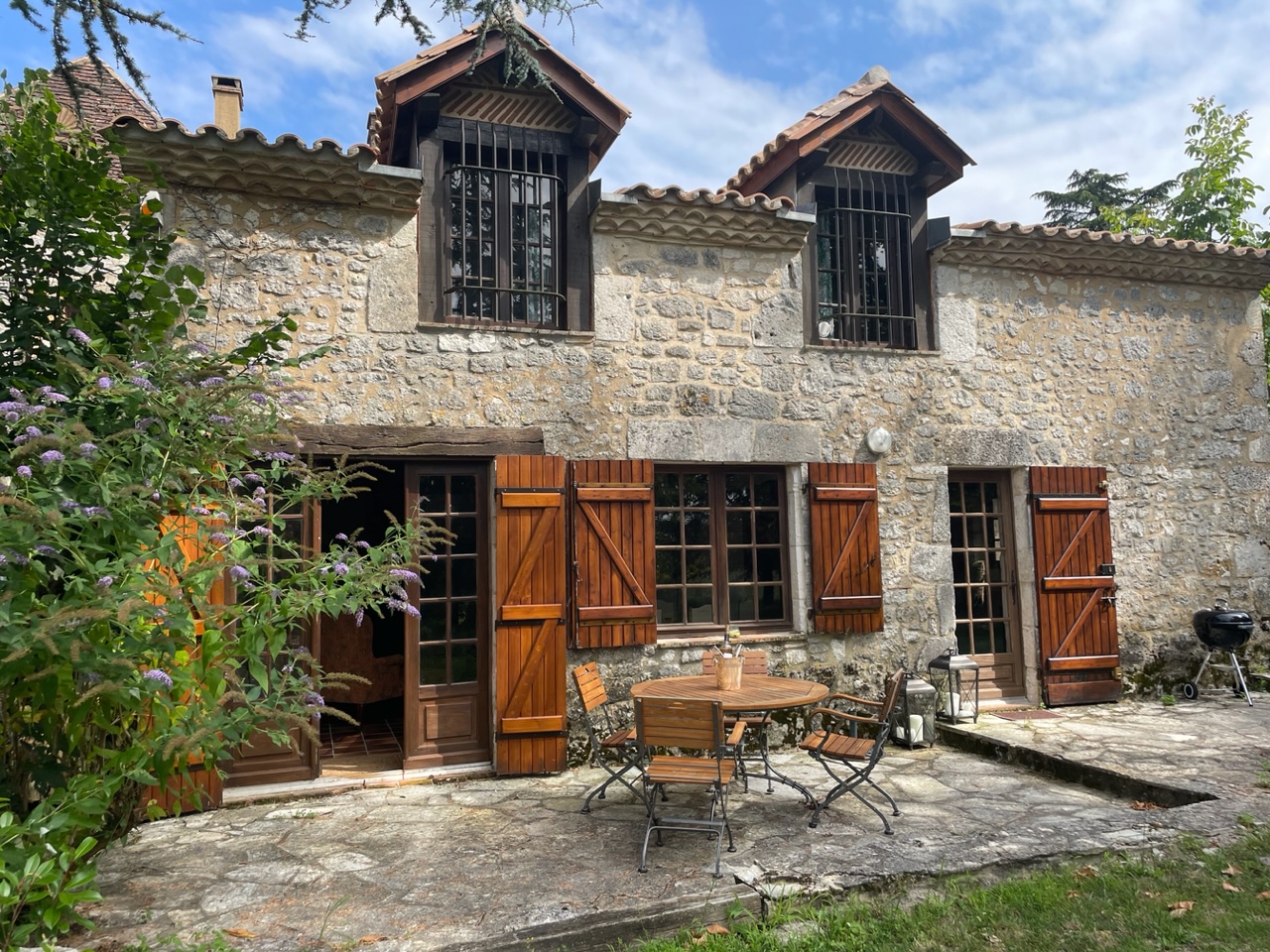
The smallest house. Two bedrooms, a private stone terrace framed by buddleia and old walls, and full access to everything else on the estate. Best for couples or a small family. Not a compromise — a choice.
The converted dovecote — three bedrooms in a building that has been many things before it became this. The carved stone dormer window is original. So is the strange, good acoustic when someone plays guitar after dinner. The favourite among returning guests, for reasons everyone describes slightly differently.
The facilities are part of the estate, not an extra. Whether you book one house or all five, you have full access.
Built into the grounds with a panoramic view across the valley. Heated, so the season runs longer than the Dordogne average.
Full-size, slightly weathered, with good sight lines and the sort of afternoon shadows that make playing at four o'clock better than playing at noon.
The heart of the estate. Encircled by the five houses and framed by old pines. Where dinners, ceremonies, and long evening conversations tend to happen.
A proper pétanque piste under the trees. Also badminton, frisbees, and whatever else you bring.
Each house has its own terrace — stone, shaded, with outdoor dining. Your private half-hour of morning sun before the day starts.
Self-catering, not full-service. Each house has a proper kitchen, equipped for cooking meals rather than reheating them. Issigeac market is six minutes away.
Oil heating is being removed. Solar is going in. This is part of the ViviSolari investigation, and we'll tell you more if you ask. It doesn't change how the place feels to stay in.
Eleven hectares in total — gardens, fields, scrub, old stone walls. Room to walk for an hour without circling back.
All the practical things. Good Wi-Fi in every house. Laundry facilities on-site. Plenty of parking inside the estate gates.
Weddings, milestone birthdays, anniversary celebrations, family reunions, creative retreats, corporate offsites — the gatherings that need more space than a house and more privacy than a hotel.
Up to thirty-four guests across seventeen bedrooms. No curfew. No noise restrictions. No neighbours to think about. The whole estate — every kitchen, every terrace, the courtyard, the pool, the tennis court, the grounds — is yours for the duration.
Events & gatherings →
Manoir du Suquet sits in Bardou, a commune of forty-three inhabitants at the boundary of the Dordogne and Périgord — two of the most visited regions of France and two of the most food-obsessed. Rivers for canoeing in one direction, caves and truffle markets in the other.
The property looks across open fields to the 14th-century Château de Bardou, a listed Monument Historique and former Hundred Years' War garrison. You can walk there. Most guests do, at least once.
A single house is a calendar transaction — check dates, see rates, book online. A whole-estate stay is a conversation — tell us when, how many, and what the week is for, and we'll come back to you.